
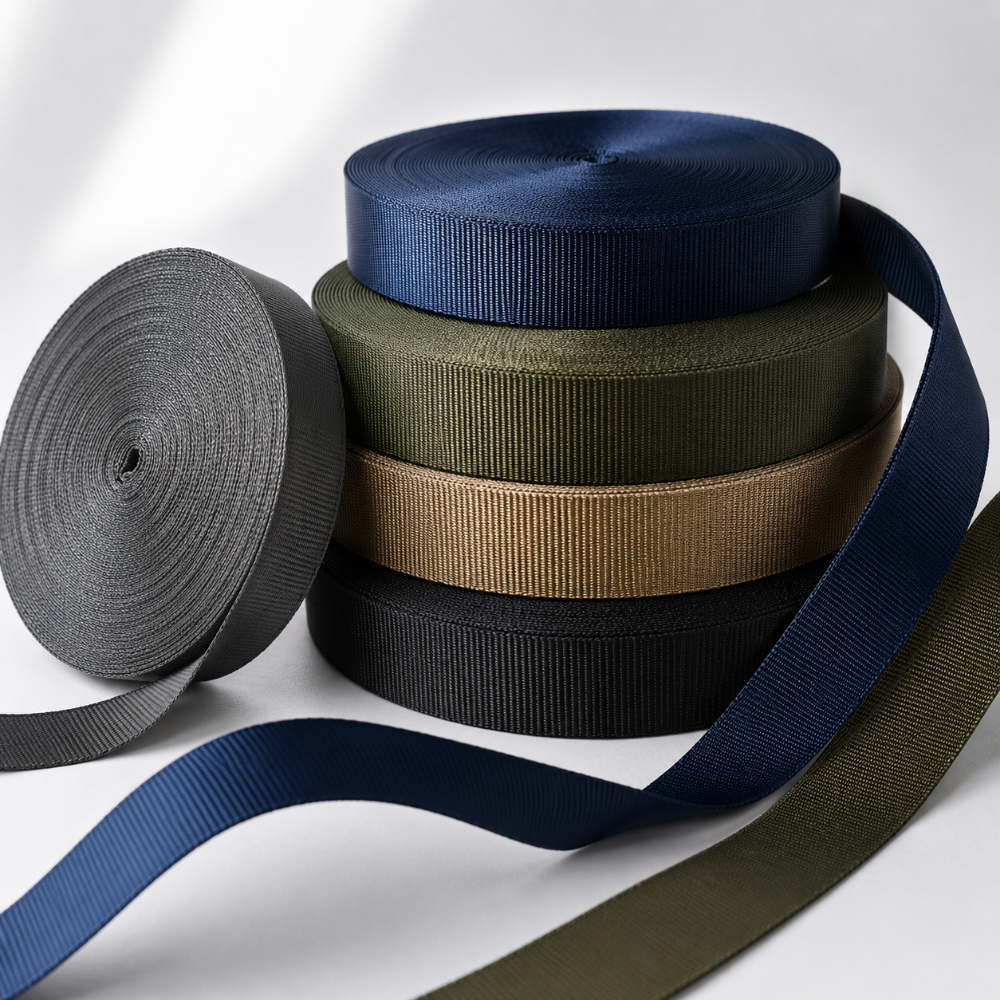
Custom webbing is one of those products where the outcome is largely determined before the loom ever starts. A clear brief, a well-prepared artwork file and a single point of approval at each stage turn a custom project into a predictable process. This guide describes how a typical development runs from first enquiry to approved sample.
The brief is the foundation. A supplier needs to know the fibre and hand feel required, the finished width and thickness, the colour reference, the quantity and the application. Photographs of a similar tape, or a physical sample of the target appearance, remove more ambiguity than any written description. Where a brand already has a colour system, supplying the reference in a standard format avoids a long matching loop.
Once the brief is understood, the supplier recommends a construction. At this stage the discussion usually turns to fibre choice, since it determines strength, stretch, colour behaviour and cost. PP offers the best value for solid-colour utility tapes, polyester balances strength and durability for bag and garment use, and nylon gives the brightest colour with slightly lower UV resistance. Aramid and UHMWPE are reserved for technical applications where high strength-to-weight ratio or heat resistance is essential.
Artwork preparation follows for any printed or jacquard design. Printed webbing reproduces detailed multi-colour artwork, gradients and photographic elements by transfer, screen or sublimation printing. Jacquard webbing builds the design into the weave itself, producing a durable pattern that will not peel or fade but requiring the artwork to be simplified into weave-compatible blocks of colour. Vector files, defined colour references and a minimum text size all help the design translate cleanly.
Sampling is the point at which the project becomes concrete. The supplier weaves, dyes or prints a sample and sends it for review. Reviewing a sample properly means checking width against the tolerance agreed, assessing colour under the intended lighting, confirming hand feel and thickness, and, where relevant, testing the tape in the actual hardware or seam construction. A sample that passes a visual check but fails in assembly will cost more time later than one that is corrected now.
Approval should be documented. Once the sample is signed off, the approved version is archived as the production standard, and subsequent bulk orders are matched against it. This single practice eliminates the most common cause of repeat-order disputes, which is a colour or hand feel that drifts gradually between batches because no reference was retained.
Finally, plan the production and shipping stages realistically. Custom webbing involves dyeing, weaving and finishing steps that each take time, and jacquard patterns generally take longer than plain tapes. Allowing for inspection and packing before shipment, rather than treating them as an afterthought, keeps delivery predictable.