
Buyers approaching a webbing supplier for the first time tend to ask the same set of practical questions. Answering them upfront shortens the quotation stage considerably and avoids misunderstandings later in the order. This guide covers the points that come up most frequently when sourcing woven webbing from China.
What is the minimum order quantity? MOQ depends on the tape and the level of customisation. Stock constructions in standard widths and standard colours can often be supplied from a few hundred metres. Custom colours, printed designs and jacquard patterns require a dyeing or setup run and typically start higher, because the setup cost has to be absorbed across the batch. Narrow specialty tapes such as aramid or UHMWPE also carry a higher minimum for the same reason.
Are samples free? Most suppliers provide free stock swatches in standard colours so that a buyer can assess hand feel, width and finish. Custom samples, whether a dyed tape, a printed design or a jacquard pattern, normally involve a sample charge. That charge is often credited against the bulk order once it is placed, so it is worth confirming the policy before requesting several iterations.
How long does production take? Stock tapes generally ship within a short window, while custom orders require time for dyeing, weaving, printing or jacquard setup plus quality inspection. A realistic planning figure for a custom webbing order is three to four weeks from artwork or lab dip approval, with jacquard and printed designs at the longer end. Shipping time to the destination port is additional and depends on the transport mode chosen.
What payment terms are normal? A deposit with the balance settled before shipment is the most common arrangement for a first order. After a trading history is established, suppliers may offer more flexible terms. Payment method should be agreed in writing, and the currency stated clearly, since webbing orders are often quoted in US dollars while some markets settle in other currencies.
What information is needed for an accurate quotation? A supplier can quote properly only with the full specification: fibre type, width, thickness, colour reference, quantity, edge finish, any logo or pattern requirement, and the intended application. Stating the end use is particularly useful, because it allows the supplier to recommend a suitable construction and to flag any technical limitation before production begins.
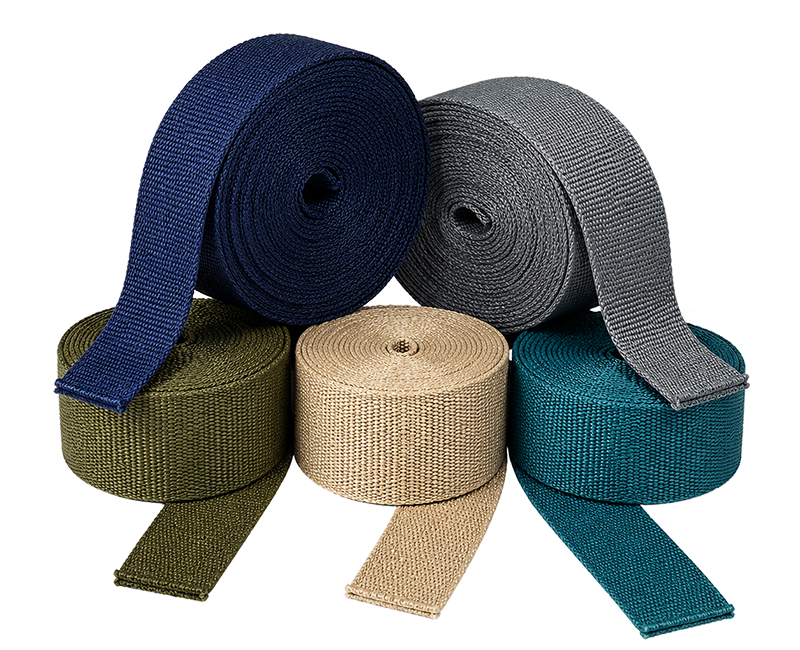
Can the same tape be supplied in several colours? Yes, and this is common for brands with several product lines. Colour consistency across repeat orders is maintained by keeping the approved lab dip on file, so it is worth requesting that your approved standard be archived rather than re-matched from scratch each time.
Buying webbing is largely a matter of specifying clearly and confirming early. Suppliers who receive a complete brief can respond with a quotation that will not need to be revised, and buyers avoid the delays that come from discovering a specification gap after production has started.